
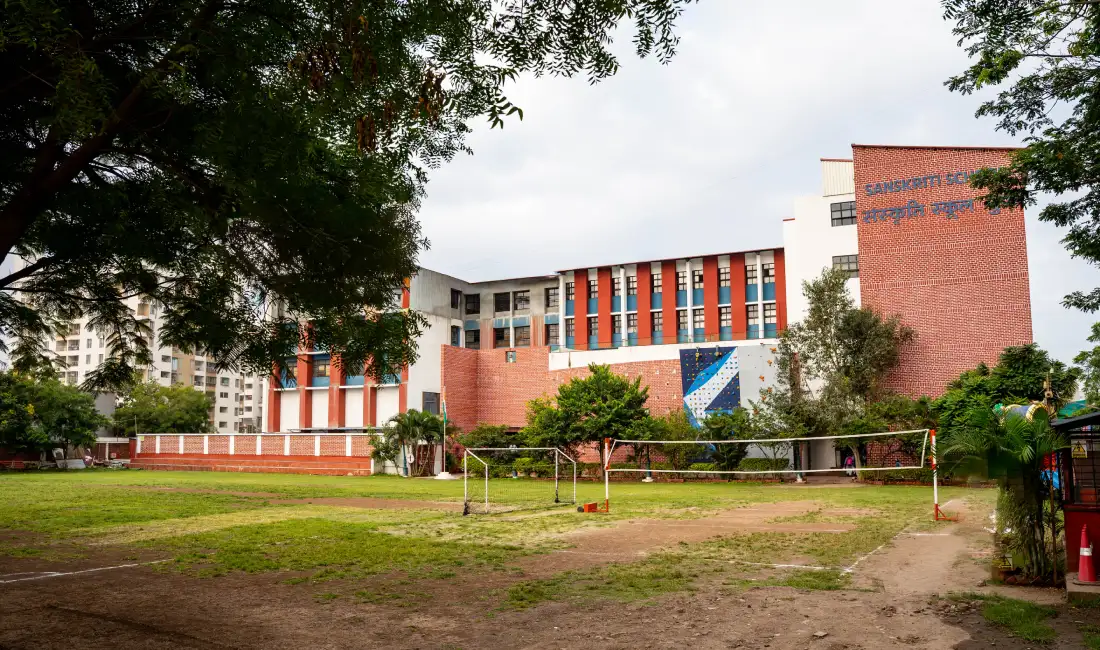
Picture a Saturday morning in Pune. A couple has four school visits lined up before lunch, and somewhere around the third campus the differences have stopped registering. Every building is spotless. Every principal brings up holistic development. Every brochure promises confident, future ready children. By the time they’re back in the car, the four schools have more or less melted into one.
“They all sounded great,” one of them says. “So how do we actually decide?”
That question sits underneath how to choose the right school for your child. You aren’t hunting for a perfect school, because there isn’t one. What you need is a sense of what to look for, so that a good fit and a good brochure stop looking alike.
This checklist is meant to give you that. It covers what research says really matters, what’s worth asking when you visit, and how the school admission process usually unfolds, so you can walk into any school with a clear head.
What Should You Look for When Choosing a School?
If you’re short on time, here’s the quick version. When you’re working out how to choose a school, these seven things deserve your attention:
- Teachers: who will teach your child, and how well the school supports them
- Belonging: whether children feel known and looked after
- The whole child: sports, arts and clubs, and not marks alone
- Communication: how the school keeps parents informed
- The daily routine: what a normal day looks like, start to finish
- Safety and wellbeing: how the school deals with bullying, stress and health
- Practical fit: distance, how clear the fees are, and admission timelines
The sections below take each one in turn, with the research behind it and the questions you can ask.
Why Lists of the Best Schools in Pune Only Take You So Far
Most parents start by searching for the best schools in Pune, and that’s a sensible place to begin. Ranking lists and review sites are handy for putting together a shortlist.
The trouble is that a list can only compare things that are easy to compare, like fees, board, facilities and location. It can’t tell you whether a shy child in Class 3 will be noticed by the teacher, or what the school does when a child starts to struggle.
So use the top schools in Pune lists to land on three or four names, and then use the steps below to choose among them. You’ll find that even the top schools in Pune look quite different once you’ve actually walked through the gate.
Step 1: Start With Your Child, Not the Brochure
Before you visit a single campus, take ten minutes to think about your child. Not the child you imagine or hope for, but the one you actually have.
- Does your child warm up slowly, or dive straight in?
- Do they learn best by doing, by listening or by reading?
- Are they bursting with energy, or do they need quiet time to recharge?
- What do they love doing when nobody has asked them to do anything?
Write the answers down, since they become your filter.
A school that’s wonderful for a confident, sporty child can feel overwhelming to a quiet one, and it works the other way round too.
Step 2: How Much Do Teachers Really Matter?
More than almost anything else on this list.
One study in the American Economic Review followed over a million children in the United States. Students who were assigned teachers better at raising test scores were more likely to go to college and went on to earn higher salaries as adults. They were also less likely to become parents as teenagers.
A fair caveat: this is US data, and the study measured teacher quality through gains in test scores, which is only one way of looking at it. Still, the bigger point is hard to wave away. The person standing at the front of your child’s classroom influences a good deal more than marks.
Here’s what that means in practice:
- Ask to meet a class teacher, not just the admissions counsellor
- Ask how the school trains and supports its teachers
- Ask how long teachers tend to stay
- If you can, sit in on a class for ten minutes
Step 3: Will Your Child Feel They Belong?
School tours tend to skip over this one, and they shouldn’t.
The CDC calls it school connectedness, which means students believing that the adults and other children at school care about their learning and about them as individuals.
According to the CDC, students who feel more connected are more likely to have higher grades and test scores and better attendance, and they’re more likely to finish school. They’re also less likely to experience emotional distress.
The same CDC page lists several ways schools build that feeling, including physical activity opportunities, student led clubs, service learning and mentoring programs.
When you visit, watch for the small signs:
- Do students greet teachers by name?
- Do older and younger children mix easily?
- What happens when a child is left out or falling behind?
- Is there someone a child can approach besides the class teacher?
Step 4: Look Beyond Marks to Sports, Arts and Clubs
When a school talks only about results, it’s telling you how it measures children and saying nothing about how it helps them grow.
Sports, music, drama and clubs are where children learn teamwork, work out how to lose gracefully, and discover something they’re good at. We’ve gone into this in more depth in our guides on the importance of extracurricular activities for students and the importance of sports in students life.
On your visit, ask:
- How often do children really play or practise each week, and is it more than just on sports day?
- Can a child try something new without being judged?
- Are activities part of the timetable, or squeezed in after school?
Step 5: How Does the School Work With Parents?
You’ll be dealing with this school for years, so how it speaks to you matters.
A well known meta analysis in Educational Psychology Review found a small to moderate link between parental involvement and students’ achievement. What’s interesting is which kind of involvement counted most. Parents’ expectations and aspirations for their child’s education showed the strongest link, while close supervision of homework at home showed the weakest.
Put simply, hovering over every worksheet isn’t what makes the difference. Clear, shared expectations and open communication seem to count for more. The study is an older one and it shows an association rather than a cause, but the pattern is still worth knowing.
So ask the school:
- How often will we hear from you, and in what form?
- Who do we talk to if we have a concern?
- How quickly do concerns usually get a reply?
- Will we hear about problems early, or only at report time?
Step 6: What Does an Ordinary Day Look Like?
Open days are polished. A regular Tuesday is where you see the truth.
Ask the school to walk you through a normal day. See how much of it is spent sitting and how much moving, when children get to read for pleasure, how screens are handled, and what lunch and breaks look like.
These details feed into the habits children bring home. Our guide to good habits for kids explains why sleep, breakfast, reading and movement matter so much, and a good school routine supports all of them. A calm, well planned day also protects focus, which we cover in our piece on how to improve concentration while studying.
Pay attention to how the school handles behaviour as well. Rules that depend on fear fade the moment nobody’s watching, whereas schools that help children build self control from the inside are teaching something that lasts. We looked at this in our piece on the importance of discipline in students life.
Which Board Is Right: CBSE, ICSE or IB?
A lot of parents who search for the best CBSE schools in Pune are really asking something bigger, which is which board suits their child.
We can’t give one answer that fits every family, and you should be wary of anyone who says they can. Boards do differ in how the syllabus is laid out and how children are assessed. But the difference between one school and another delivering the same board is usually far larger.
A few practical things to weigh up:
- Your family’s plans, such as a possible move to another city or country
- How the school teaches the board, and not only which board it follows
- Whether the school runs through the senior classes you’ll need
Whichever board you settle on, the same checklist applies, even if your search began with the best CBSE schools in Pune. In our view, a strong school on any board beats a weak school on the board you had your heart set on.
What Is the School Admission Process in Pune?
Every school runs its own process, so treat this as a general map and confirm the details with each school.
Most follow roughly these steps:
- Shortlist three or four schools using the steps above
- Check the dates. Many schools begin admissions months before the new academic year, so ask each one for its timeline
- Visit the campus, ideally on an ordinary working day
- Collect the application form and the list of documents required
- Submit the documents. Schools usually ask for things like the child’s birth certificate, address proof and photographs, and for older classes, records from the previous school. Always go by the school’s own list
- Interaction or assessment. Some schools hold a simple interaction with the child and parents, and others don’t. Ask what to expect so you can prepare your child calmly
- Offer and fees. Read the fee structure and what it covers before you confirm the seat
Keep a simple folder with copies of everything. It saves a lot of last minute stress during the school admission process.
Twelve Questions to Ask on Your School Visit
Carry this list with you, and don’t be shy about asking.
- Can I meet my child’s likely class teacher?
- How do you support a child who is struggling, and one who is ahead?
- How do you handle bullying, and how will I find out if something happens?
- What does a normal day look like, hour by hour?
- How much time do children get for sports, arts and free play each week?
- What is your approach to screens and homework?
- How and how often do you communicate with parents?
- How do new children settle in over the first few weeks?
- How are teachers trained and supported?
- What is the full fee structure, including anything extra?
- How do you support children’s emotional wellbeing?
- Can I speak to a few current parents?
Green Flags and Red Flags
Once you’ve seen a few schools, this is the rule of thumb we’d use.
Green flags
- Staff answer hard questions directly
- Children look relaxed and curious
- You can see children’s own work around the school
- The school is happy for you to visit on a normal day
Red flags
- Vague answers about fees or admissions
- Pressure to confirm a seat quickly
- Conversation that circles back to rankings and results
- Reluctance to let you speak to teachers or parents
How Sanskriti School, Pune Thinks About Choosing a School
We’d much rather you choose with a clear head than choose us because of a brochure.
So run this checklist on every school you visit, ours included. Ask the hard questions, look at a normal day, and watch how the children carry themselves.
What we care about lines up with a lot of this guide: children who feel known, a strong sports and activity program that includes taekwondo, and habits and values that reach beyond marks. You can read more about how we think in our guides on 20 moral values for students and the importance of reading.
If you’d like to see us for yourself, come and visit, bring your list and ask away.
Questions Parents Ask About Choosing a School
How do I choose the right school for my child?
Begin with your child’s personality, then shortlist three or four schools. Judge each one on seven things: teachers, belonging, activities beyond academics, communication with parents, the daily routine, safety and wellbeing, and practical fit. Visit on an ordinary day and put the same questions to every school.
How to choose a school if I have only a weekend to decide?
Pick three schools, visit on a normal working day and ask the same twelve questions at each. It’s the quickest honest way of working out how to choose a school without leaning on brochures.
What should I look for in a school?
Look for teachers who are well supported and tend to stay, children who feel known and cared for, a genuine program of sports and arts, clear communication with parents, and honest answers about fees and admissions. CDC research links feeling connected at school with better grades, better attendance and lower emotional distress.
What is the school admission process in Pune?
Each school has its own process, but most follow similar steps: shortlist, check dates, visit, submit the form and documents, an interaction or assessment in some schools, and then the offer and fee payment. Ask every school for its timeline and document list early, whether you’re looking at the top schools in Pune or a smaller neighbourhood school.
When should I start looking for a school in Pune?
Earlier than you’d think. Many schools open admissions several months before the academic year begins, and starting early gives you time to visit, compare and decide without pressure.
Which are the best CBSE schools in Pune?
There’s no single answer, because the best fit depends on your child. Use a list of the best CBSE schools in Pune to build a shortlist, then compare them on teachers, belonging, activities and communication.
Which board is best, CBSE, ICSE or IB?
There’s no single best board. The right one depends on your family’s plans and, more importantly, on how well a particular school teaches it. Compare schools, not just boards.
Are lists of the best schools in Pune reliable?
They’re a good starting point for a shortlist, but they mostly compare fees, facilities and results. They can’t show you how a school feels from one day to the next, which is why a visit and a checklist matter.
How many schools should I visit before deciding?
Three to five is usually enough. Visit fewer and you may not have a real comparison, and visit more and the schools begin to blur together.
Sanskriti School is a school in Pune committed to educating the whole child. To visit us or learn about admissions, reach out here.